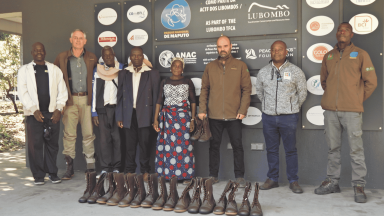
Zambia’s Simalaha Community Conservancy is advancing conservation agriculture by equipping local farmers with the tools and skills needed to grow nature-friendly crops.
Among these is chilli, which is gaining popularity both as a resilient crop and a practical solution for reducing human-wildlife conflict.
Farmers in the region are now exploring chilli farming as a new income stream. Not only is chilli drought-resistant, making it ideal for the climate, but it also supports coexistence with wildlife by helping deter animals such as elephants from entering and destroying farmers’ crops.
With support from Peace Parks Foundation, the conservancy assists farmers by providing irrigation equipment and guidance on pest and disease control methods, while encouraging environmentally sound practices.
“We are co-existing with wildlife – in the same area we have people, livestock and wildlife – so we encourage farmers to use biological pest control methods,” Catherine explains.
Chilli farming has become a vital lifeline during dry seasons thanks to its resilience to water scarcity. Donald Kabika, a chilli farmer in Mwandi community, says the crop supported his family during a difficult period.
“We started growing chilli with help from Simalaha and Peace Parks, who supported us with fencing and expert guidance,” he says.
As farmers grow chillis, they improve their livelihoods while contributing to a conservation-led approach that balances people, crops and wildlife in shared landscapes.
Read more about this growing project here.
Stay tuned to PeaceParks.TV for more on-the-ground updates.