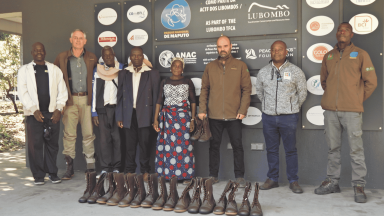
Across the Great Limpopo Transfrontier Conservation Area, partners are working to reconnect the landscape between Limpopo and Banhine national parks through a designated ecological connectivity area. While this helps restore natural wildlife movement and strengthen the wider landscape, it also brings people and wildlife into closer contact. Supporting communities and reducing human-wildlife conflict is therefore a critical part of the work.
“There is no future for national parks if communities that live around those national parks are not involved in conservation,” says Luis de Torres, Programme Manager at the European Union Delegation.
In response, partners are working closely with communities across the landscape to understand their needs and help them live in balance with nature.
Governance is central to this approach. By working with Mozambique’s National Administration for Conservation Areas (ANAC) on land-use planning and strengthening community governance structures, the project is helping guide how this shared landscape is managed and ensuring that decisions are locally informed and sustainable over time.
In partnership with the Mozambique Wildlife Alliance, collective farming areas are being established and protected through fencing to help reduce crop losses and human-wildlife conflict.
This project is funded by the European Union and implemented in partnership with the Mozambique Wildlife Alliance, ANAC and Peace Parks Foundation.
Watch the full story to see how this is taking shape on the ground.